The Question That Almost Nobody Asks

Amar Pandit , CFA , CFP 

September 1, 2026 | 5 Minute Read
A few weeks ago, I found myself sitting in a family office meeting.
Around the table were accomplished professionals. Investment bankers, chartered accountants, lawyers, wealth managers and specialists from different disciplines were discussing how best to manage a family’s wealth. The conversation was intelligent, thoughtful and technically sophisticated. Structured products were evaluated. Private credit opportunities were debated. Global diversification came up. Tax implications were discussed. Someone referred to a recent transaction another family office had executed. Another spoke about downside protection and expected returns.
There was no shortage of expertise in the room. Yet as the meeting progressed, I found myself becoming increasingly uncomfortable. This was not because anyone said something incorrect. In fact, it was quite the opposite.
Everything being discussed was sensible and perhaps that was precisely the problem.
After nearly an hour of conversation, I realized that the most important thing had never happened.
Nobody had asked the family what they wanted…not even once.
It made me wonder whether we have quietly accepted the wrong way of having investment conversations.
We often begin with solutions.
“What do you think about this mutual fund?”
“Should I invest in this PMS?”
“I’ve heard private credit is doing well.”
“My friend invested in this strategy.”
“What kind of returns can I expect?”
On the surface, every one of those questions sounds perfectly reasonable. In fact, most investment conversations begin exactly that way, but I have gradually come to believe that almost all of them arrive far too early. They assume we already understand the problem. Very often, we don’t.
Imagine walking into a doctor’s clinic.
Before asking what brought you there, before asking where it hurts or understanding your medical history, the doctor begins explaining why a particular medicine is excellent.
Most of us would probably walk out not because the medicine is bad but because prescription without diagnosis is simply guesswork.
The order matters. Because once we start with a product, every question that follows is about choosing between products. The conversation rarely finds its way back to the person they were meant to serve.
Even imagine meeting an architect for the first time.
Instead of asking how your family lives, how many children you have, whether your parents will live with you or how you imagine spending your evenings, the architect begins by recommending Italian marble, imported lighting and floor-to-ceiling windows.
Again, something feels wrong.
The materials may be exceptional, but they are being discussed before anyone has understood the life the house is supposed to serve.
Yet this is exactly how many investment conversations begin.
We start with products or performance or predictions. Rarely do we start with people. Over the years I have had the privilege of speaking with thousands of investors.
Their opening sentences are remarkably similar.
“I want high returns.”
“I don’t want to lose money.”
“I want something safe.”
“My colleague has invested in this.”
“I’ve heard this fund has done really well.”
These sound like starting points…I don’t think they are…I think they are clues.
Each statement is quietly pointing towards a much deeper question that nobody has asked yet.
Why do you want high returns?
What does “safe” mean to you?
What are you trying to achieve with this money?
What would happen if your portfolio earned slightly less but gave you a much higher probability of reaching your life’s goals?
What worries you more…market volatility or running out of money twenty-five years from now?
Those questions are far more difficult…They are also infinitely more valuable.
Twelve years ago, I met two investors within a span of a few days. They were of similar ages. Both had accumulated roughly the same amount of assets. They both wanted their portfolios to generate approximately twelve percent annual returns.
On paper, they appeared almost identical.
If I had stopped there, I might have designed similar portfolios…
I asked a question that had nothing to do with investments…
“What is this money for?”
The first gentleman said, “I’m retiring next year. This portfolio must fund the rest of my life.”
The second one said.
“I don’t need this money. My children are financially independent. This is really for my grandchildren.”
In less than a minute, two investors who appeared identical became completely different.
The products didn’t change because markets had changed…The products changed because the conversation had changed.
That, I believe, is the quiet power of good questions. They don’t merely collect information; they change the strategy itself.
The finest wealth professionals I have met rarely begin by talking about products.
They begin by becoming deeply curious about people.
What does a meaningful life look like to you?
When do you hope to retire?
Who depends on you financially?
What keeps you awake at night?
What are you afraid of?
What would success look like if we met again ten years from today?
Those conversations often have very little to do with finance…Yet they determine almost every important financial decision that follows.
One of the biggest mistakes we make is forgetting the role that products were meant to play in the first place.
A mutual fund is not the destination…Insurance is not the destination…A PMS is not the destination…Private equity is not the destination.
These are tools…Useful tools…Powerful tools…but tools nonetheless.
We would never allow a hammer to decide what kind of house we should build.
We first imagine the house…Only then do we decide which tools belong on the construction site.
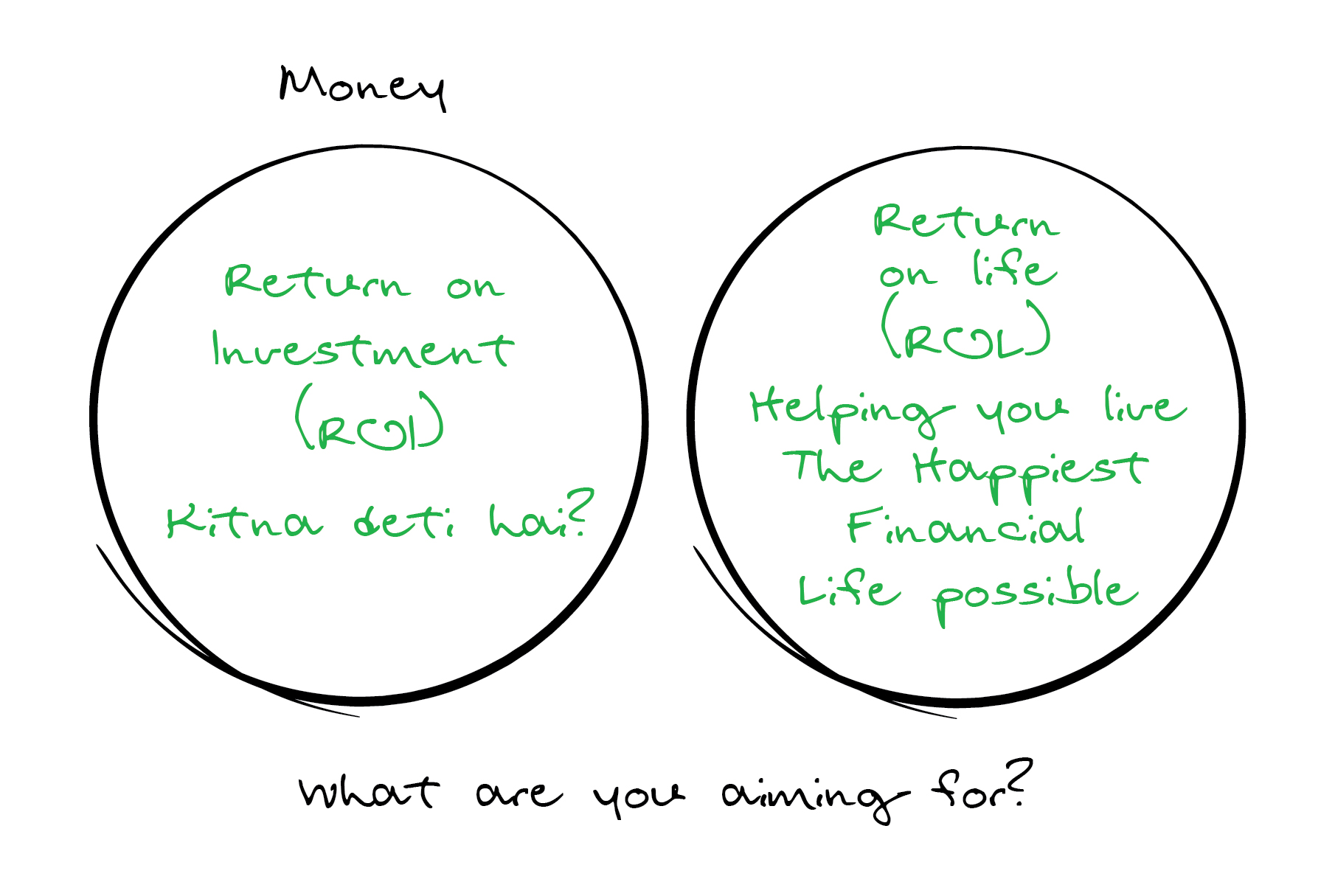
Investing deserves the same discipline. Money is not a product problem. It is a life problem.
Products exist only because human beings have dreams, fears, responsibilities and aspirations that money can help support.
The moment we reverse that sequence; products quietly become the center of the conversation instead of remaining what they were always meant to be.
They were meant to serve us and not to be our masters.
As I walked out of that family office meeting, I wasn’t thinking about structured products or private credit or global equities. I found myself thinking about a single question that had never been asked.
“What is it that this family truly wants?”
The entire meeting would have unfolded differently had it begun there…Perhaps some of the products discussed would still have found their way into the final portfolio…Perhaps they wouldn’t have.
What I do know is this.
The quality of an investment recommendation can never exceed the quality of the conversation that came before it.
Every great investment conversation begins in the same place. They don’t begin with products or with returns or even with money.
It begins with a human being trying to build a meaningful life… Everything else should follow from there.



 and then tap on
0 Comments