The Best Investment We Made This Year

Amar Pandit , CFA , CFP 

August 25, 2026 | 7 Minute Read
Every year, my family takes a vacation together.
We have done this for years and, like most families, we return home with photographs, a few souvenirs and stories that slowly become part of family folklore. Every holiday has been special in its own way, yet when I look back today, I know without doubt that this one trip will probably be in our hearts and minds far longer than any of the others.
This is not because we traveled farther or because we stayed in more luxurious hotels or because we spent more money. This holiday became unforgettable because, for the very first time, one member of our family who had always been left behind came with us.
Our dog, Fudge.
For years, this had quietly bothered all of us. Every time we planned an international holiday, the excitement of packing our bags was accompanied by a small feeling of guilt. We knew Fudge would be well looked after, but that wasn’t really the point. He was family, and every year we were making memories without him.
We tried twice taking him abroad and we gave up given the challenges of taking him with us.
Every conversation seemed to produce different information. Every website appeared to have a different answer. Every person we spoke to seemed uncertain about the paperwork, the permits and the process. Somewhere along the way we concluded that perhaps it simply wasn’t meant to happen.
Then, earlier this year, our daughter Reet quietly decided she wasn’t willing to accept that answer. She researched, called, and emailed the customs folks in Switzerland. She called the airline in Mumbai as well as in Zurich. She did the paperwork and kept going until every piece of the puzzle fell into place. The Swiss customs people were super helpful. Though we applied for one document at the very last moment, they gave us the approval and import license in just 24 hours.
In fact, the process was so confusing that we are now documenting everything ourselves in the hope that another family won’t have to struggle the way we did. However, that isn’t really what this essay is about.
This essay is about what happened afterwards because somewhere over the snow-covered mountains, I realized something that had absolutely nothing to do with travel.
The first time Fudge saw snow was on Mount Titlis, he didn’t quite know what to make of it.
He sat as he had worn shoes and he was not comfortable walking in them. He then ran, stopped, and looked around. He walked and then ran again.
We took him everywhere with us whether it was Rhine Falls, Interlaken, Grindelwald or Jungfrau.
Everywhere we went, he came with us…People smiled at him…Children and adults stopped to pet him…Strangers began conversations that would probably never have happened otherwise.
He somehow became part of the experience instead of simply accompanying it.
Looking back now, I don’t remember the exact temperature that day, but what I certainly remember is watching all of us laugh as Fudge rolled in fresh snow for the first time. That single memory is probably worth more to me than half the things I have bought over the last decade.
One of the quietest illusions we live under is the belief that happiness can be purchased one object at a time. We rarely say it aloud, but our behavior often reveals it.
We postpone contentment until the next house, the next car, the next gadget or the next luxury purchase finally arrives. And when it does, there is usually a moment of genuine excitement. Then life quietly resets. The object that once occupied our thoughts slowly becomes part of the furniture of everyday existence.
It isn’t that we made a bad purchase. It is simply that possessions have an extraordinary ability to become ordinary. They enter our lives with celebration and leave our consciousness with astonishing speed. The watch that once seemed extraordinary eventually becomes the watch you no longer notice. The new car slowly becomes the old car. The latest phone becomes last year’s phone.
Psychologists call this hedonic adaptation…Most of us simply call it getting used to things.
Experiences behave differently especially when they are shared with people we love. Unlike possessions, experiences don’t merely exist in the present. They continue paying emotional dividends long after they are over.
Years later, one photograph can transport you back to an afternoon that you had almost forgotten. One conversation at a family dinner can bring everyone back to the same shared moment. One silly story becomes funnier every time it is retold.
Experiences have a remarkable ability to compound not financially but emotionally and perhaps that is one of the least appreciated forms of compounding there is.
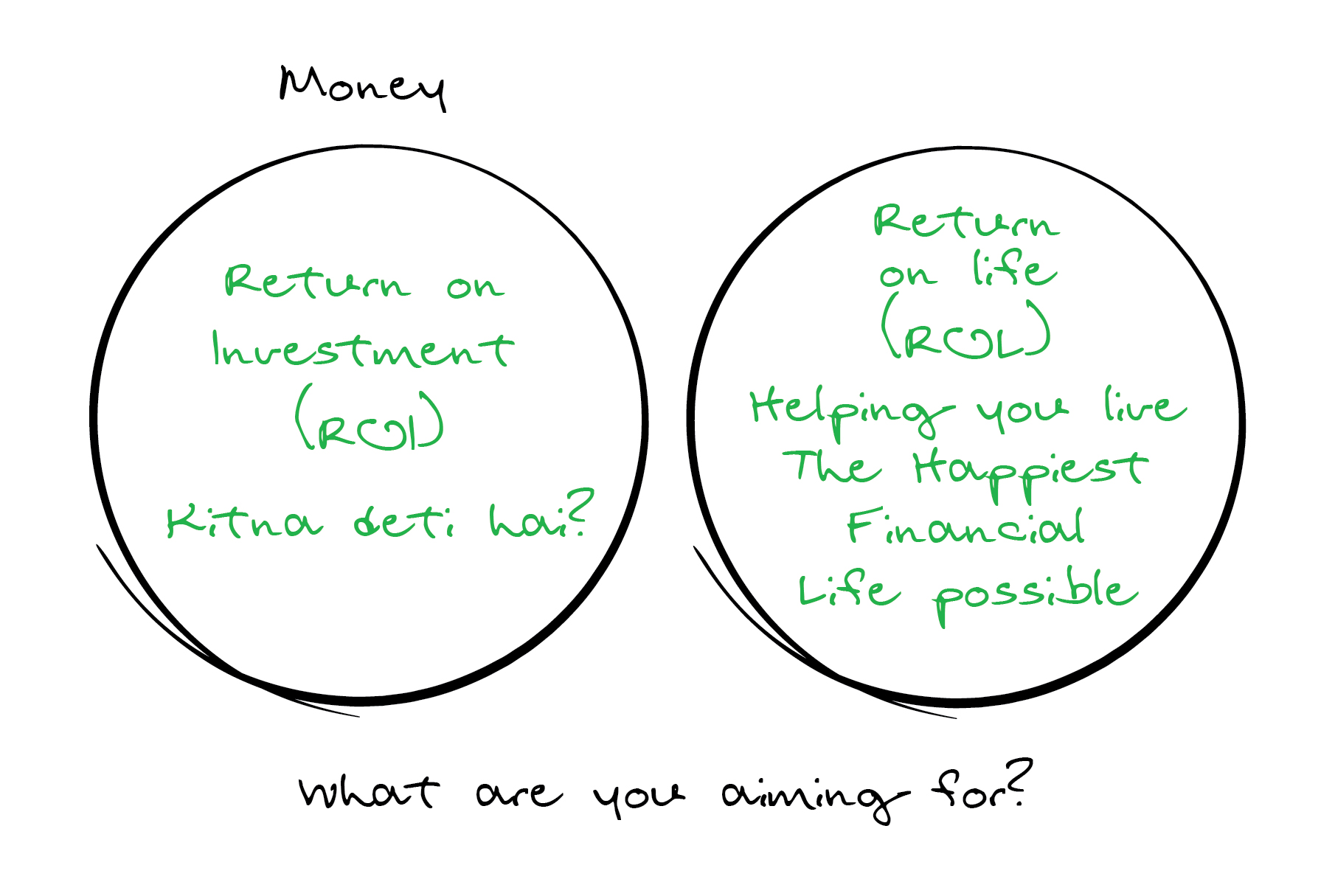
As investors, we spend a great deal of our lives thinking about financial returns. We talk about the extraordinary power of compounding, the importance of remaining invested through difficult markets, the virtue of patience and the rewards that eventually come to those who can delay gratification. These ideas have shaped some of the greatest fortunes in history, and rightly so. They deserve our attention because they teach us how wealth is created.
Yet the greyer hairs I get, the more I find myself wondering whether we sometimes become so absorbed in the mechanics of building wealth that we quietly lose sight of the reason we wanted it in the first place. We become remarkably good at answering questions like, “How much should I save?” or “What return should I expect?” while rarely pausing to ask a far more important one.
What, exactly, is all this money for?
That question sounds almost too simple, yet it has a curious way of changing every conversation that follows.
For most of us, money was never meant to be the destination. It was meant to be the bridge. We didn’t work hard, save diligently and invest patiently simply so that one day we could look at a larger number on a screen. We did it because we hoped that money would buy us something far more valuable than possessions. We hoped it would buy us freedom. Freedom to spend more time with the people we love. Freedom to say yes to experiences that become family stories. Freedom to be present for moments that cannot be postponed until some imagined future.
That is why, when I look back at the happiest memories of my own life, I rarely remember what I bought. I remember where I was, who I was with and how I felt. I remember conversations far more vividly than purchases. I remember laughter far more clearly than luxury. And this is no accident. Wealth was never supposed to be measured only by what it allows us to own. Perhaps its greatest purpose is to help us create moments that continue paying emotional dividends long after the money itself has been forgotten.
The purpose of building wealth was not to accumulate a larger collection of things. It was to create a larger collection of moments such as to be present at your daughter’s graduation without worrying about work, to travel with your parents while they are still healthy enough to travel, to take your children somewhere they will remember long after they have forgotten the gifts you bought them, or to sit around a dining table with three generations sharing stories that become part of your family’s identity.
Perhaps even to watch your dog discover snow for the very first time.
I have often noticed that the happiest investors I meet rarely talk about the things they own. They talk about experiences.
A road trip across India…A safari where they finally spotted a tiger after years of trying…A trek completed with old friends…A grandchild’s first birthday.
It is fascinating.
Ask anyone about the best watch they ever bought, and the conversation usually lasts a minute or two. Now ask them about the most memorable holiday they ever took with the people they love and watch their eyes light up.
They don’t merely remember…They relive.
That is because experiences create something possessions never can – shared memories. And shared memories quietly become shared identity.
Families aren’t held together by expensive furniture. They are held together by stories.
There are two words that may be among the most valuable words a family can ever say.
“Remember when…”
Think about what almost always follows those words. No, it’s not the price of something you bought or the model of the car you drove or the watch you wore.
What follows is always a story.
“Remember when it suddenly started snowing?”
“Remember when Fudge refused to get back into the cable car because he was far too fascinated by everything around him?”
“Remember how hard we laughed that evening that our stomachs hurt?”
Those conversations do something remarkable…For a few moments, time collapses.
Everyone around the table is transported back to the same place, feeling the same emotions. The years disappear. Children become children again. Parents become younger. Even those who are no longer with us somehow return through the stories we continue telling.
That is one of the greatest returns experiences ever produce.
They don’t simply create memories; they create a shared history and over time, that shared history quietly becomes the glue that holds families together.
Those moments become emotional assets and unlike physical assets, they don’t depreciate. If anything, they appreciate. Every time they are remembered, they become richer.
Perhaps the greatest irony is that many of us postpone these moments until life finally feels ready. We tell ourselves that we will travel when work becomes less demanding, spend more time with family when the business is stable, or create those memories after we have accumulated “enough.” Enough money. Enough success. Enough certainty. Enough free time. It sounds sensible while we are saying it, yet life has a curious way of ignoring those carefully constructed plans.
Children don’t remain children while we build our careers. Parents don’t stay young while we wait for the perfect time. Friends move to different cities, different countries and sometimes different stages of life. Even the pets who greet us so enthusiastically every evening have far shorter lives than we wish they did. Opportunities to create certain memories are often available for only a brief window, although we rarely recognize that while we are living through it. We usually realize it only after that window has quietly closed.
As I looked through the photographs after returning home, I found myself thinking about something that no financial statement, no investment portfolio and no net worth calculation will ever capture. The real return on that holiday was never measured in Swiss francs. It wasn’t reflected in hotel bills or passport stamps, and it certainly wasn’t determined by what we spent. Its value lay somewhere else entirely. It lay in watching Fudge experience snow for the first time. It lay in my daughter’s smile as she saw months of planning come to life. It lay in the conversations we had while walking through Interlaken, the laughter we shared in those 16 days and the simple joy of having our entire family together.
Wealth was never meant to be judged only by the things it allows us to accumulate. Its highest purpose is to help us create stories that become part of a family’s history. Stories that will be retold around dining tables long after the money spent has been forgotten.
Twenty years from now, I doubt anyone in our family will remember what the hotels cost or what exchange rate the Swiss franc was trading at. But I have a feeling someone will smile and say, “Do you remember the year Fudge saw snow for the very first time?”
In that very moment, we’ll all be there again. That is what wealth was always meant to do…not help us own more…but help us remember more.


 and then tap on
0 Comments