This is Where Financial Clarity Begins

Amar Pandit , CFA , CFP 

March 17, 2026 | 7 Minute Read
“Now that you have all that you need, what is it that you really want out of life?”
I asked Anand this question over coffee.
Anand is a seasoned entrepreneur in his late fifties. He has built businesses, created wealth, navigated crises, and spent decades making decisions that affected hundreds of employees and customers.
From the outside, Anand looked like someone who had figured out money.
Yet our conversation that day revealed something interesting.
I followed my first question with a few others.
“What does a meaningful and fulfilling life look like to you?”
“Are you really happy?”
“Do you still worry about money?”
“What role does money play in the life you want to live now?”
These were simple questions.
But Anand did not answer immediately.
He paused.
Then he smiled and said, “I have never thought about money this way.”
For decades Anand had thought about money through a very different lens.
Returns.
Products.
Growth.
Opportunities.
Deals.
Like many successful people, his financial life had been shaped by the language of accumulation.
But the intersection of life and money had rarely entered the conversation.
And yet, that intersection is where the most important financial decisions are actually made.
At some point in life, every investor must confront a deeper question.
Not how much money can I make, but:
What is money actually for?
When we began exploring this question together, Anand initially struggled.
The answers did not come instantly.
Because most of us are trained to think about money in numbers.
Net worth.
Returns.
Assets.
Performance.
But very few of us are trained to think about money in terms of life outcomes.
As the conversation unfolded, Anand slowly began to articulate what truly mattered to him.
He spoke about his family.
He spoke about his health.
He spoke about time.
He spoke about experiences he had postponed for years because he was “too busy building the business.”
And suddenly a different picture of money began to emerge.
Anand realized that what he valued most was not simply wealth.
It was freedom and meaning.
He wanted more time with his wife and children.
He wanted to travel slowly, not in rushed business trips.
He wanted to mentor younger entrepreneurs.
He wanted to support causes that mattered to him.
He wanted to take care of his parents with dignity.
He wanted the freedom to choose what he worked on, rather than feeling obligated to pursue every opportunity.
These priorities had always existed.
But they had rarely been connected to the way his capital was being deployed.
This is where the most powerful question emerged.
“If these things are truly important to you,” I asked Anand, “is the way you are using your money aligned with them?”
This question created a moment of silence.
Because alignment is where financial clarity begins.
Let us look at what alignment actually means.
Anand had accumulated significant wealth, yet his financial strategy was still structured as if he needed to maximize returns at all costs.
He was taking risks that made sense for someone in their thirties, not someone who valued stability and time.
Alignment meant restructuring parts of the portfolio so that Anand could worry less about market fluctuations and focus more on living the life he wanted.
Anand realized that many of the experiences he valued had been postponed indefinitely.
Family trips.
Personal exploration.
Learning.
These were always pushed to “later.”
But money that is always saved for later sometimes forgets to serve life today.
Alignment meant deliberately allocating money toward experiences that enrich relationships and memories.
Anand had always believed in giving back, yet philanthropy had never been intentionally structured into his planning.
It happened occasionally, but not deliberately.
Alignment meant setting aside capital to support educational initiatives and entrepreneurial mentorship programs that reflected his values.
Despite having significant wealth, Anand admitted that he still worried about money.
This surprised him.
Because often financial anxiety is not about how much money we have.
It is about lack of clarity around what the money is meant to do.
Once Anand clearly defined the purpose of his capital, his financial strategy began to feel calmer and more intentional.
At this point Anand said something insightful.
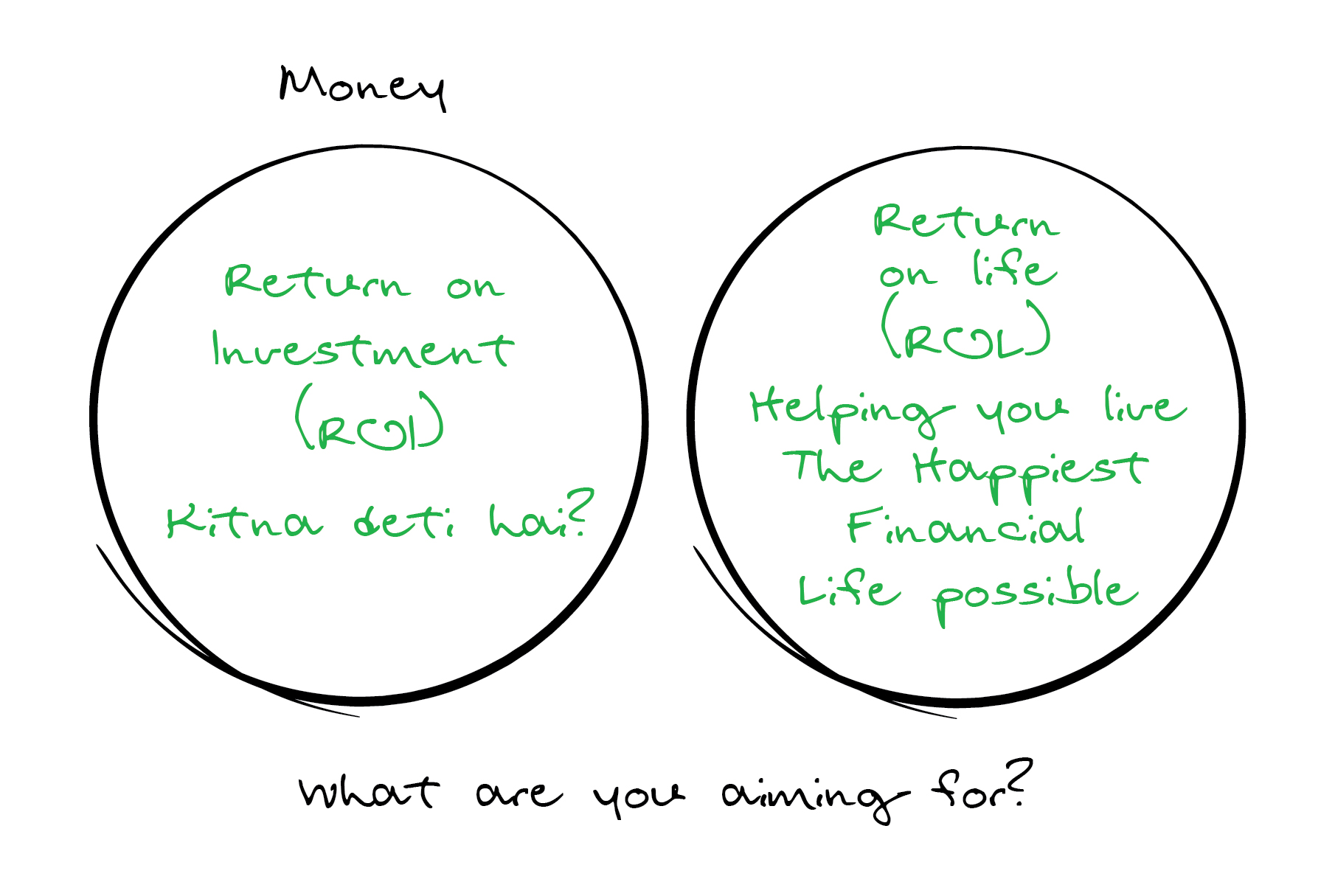
“For years I thought the purpose of investing was to maximize returns. Now I realize the purpose of investing is to maximize life.”
This shift may sound philosophical.
But it has very practical implications.
Because once you understand what truly matters to you, your financial decisions begin to change.
You stop chasing every opportunity.
You stop comparing your portfolio to others.
You stop measuring success only through numbers.
Instead, you begin asking a different set of questions.
Does my money give me freedom?
Does it support the people I love?
Does it help me live according to my values?
Does it allow me to contribute to the world in a meaningful way?
When money aligns with life, something interesting happens.
We call this intersection HappyRich.
It is the point where capital serves purpose.
Where wealth supports well-being.
Where financial success enhances life rather than complicating it.
This does not mean you stop caring about returns.
Returns matter.
Growth matters.
Discipline matters.
But they become means, not ends.
Before you think about markets, portfolios, or returns today, try answering a few simple questions.
What does a meaningful life look like for you?
What truly brings you joy?
What worries you most about money?
What would financial freedom allow you to do differently?
If you had enough capital today, how would you spend your time?
And perhaps the most important question of all:
Is the way you are using your money aligned with what truly matters to you?
These questions may appear simple.
But they are powerful.
They force us to move beyond the language of finance and into the language of life.
When Anand left that conversation, he did not rush to make dramatic financial changes.
Instead, he began reflecting.
He started thinking differently about his capital.
He started asking deeper questions.
And that is where real financial wisdom begins.
Not in predictions.
Not in market timing.
Not in chasing the next opportunity.
But in understanding the deeper purpose of money in our lives.
Because at the end of the day, the real measure of wealth is not simply how much we accumulate.
It is whether our money helps us live the life we truly value.
Pause for a moment now.
Ask yourself the same question I asked Anand.
Now that you have what you need, what do you really want out of life?
Your answer might change the way you think about money forever.



 and then tap on
0 Comments